
XaaS, short for Everything-as-a-Service (sometimes called Anything-as-a-Service), describes the practice of delivering IT solutions, including applications, platforms, and infrastructure, through cloud-based IT services or measured consumption models.
Rather than purchasing and maintaining physical hardware, organizations can tap into flexible, on-demand services tailored to their requirements. This approach shifts IT from asset ownership toward utility-style consumption, reducing complexity and enabling agility. As a result, XaaS has become a key driver of cloud adoption and digital transformation.
What is XaaS?
The term “Everything-as-a-Service” describes a cloud business model in which diverse IT resources, from applications and platforms to infrastructure and hardware, are provided remotely via the cloud as a service. Instead of investing heavily in equipment, companies gain access to these resources on demand. This transition reduces capital spending and promotes a more sustainable operational expense framework.
Workflow of XaaS
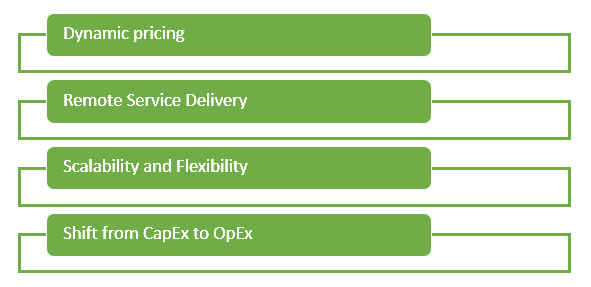
Dynamic Pricing: Real-time cost adjustment based on usage, on-demand, or chosen service tiers. Featuring a subscription model and a measured service model.
Remote Service Delivery: Services are hosted on remote infrastructure, removing the need for complex on-site hardware setups.
Scalability and Flexibility: Resources can be scaled up or down instantly, allowing businesses to adapt quickly to workload changes or growth without heavy investments.
Shift from CapEx to OpEx: Instead of large capital expenditures on IT systems, organizations move to operational expenses—paying only for what they use, when they use it. This reduces upfront costs and improves financial agility.
This cloud service model supports hybrid cloud and multi-cloud cost-efficient IT transformation strategies, making it ideal for modern enterprises.
Types of XaaS
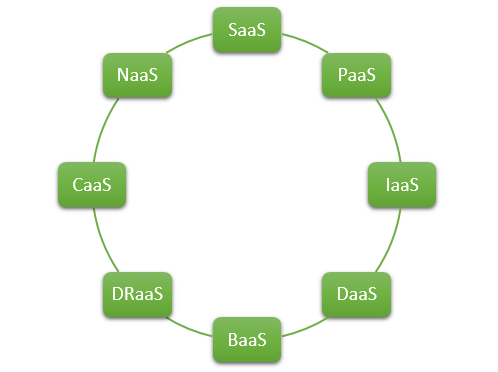
XaaS applications are typically delivered to users over a network connected to the internet through cloud computing.
SaaS (Software as a Service):
- Ready-to-use applications delivered via the cloud.
- Industry-specific solutions
PaaS (Platform as a Service):
- Cloud-based environment for app development and deployment.
- Accelerates innovation in fintech, AI/ML, and regulated industries.
IaaS (Infrastructure as a Service):
- On-demand compute, storage, and networking resources.
- high-performance computing, sovereign cloud, and AI workloads.
DaaS (Desktop as a Service):
- Provides virtual desktops hosted in the cloud.
- Enables remote work, BYOD (bring your own device), and secure desktop delivery without local infrastructure.
BaaS (Backup as a Service):
- Provides cloud-based backup and recovery solutions.
- Ensures data protection, compliance, and disaster resilience for SMEs and enterprises, especially against ransomware and system failures.
DRaaS (Disaster Recovery as a Service):
- Provides cloud-based replication, backup, and failover to restore IT systems.
- Ensures business continuity and compliance even after disruptions.
CaaS (Container as a Service):
- Managed container orchestration (Docker, Kubernetes).
- Microservices-heavy industries need portability and scaling.
NaaS (Network-as-a-Service)
- Programmable, on-demand bandwidth and connectivity with consumption pricing.
- Multi-cloud routing, SD-WAN, secure edge networking.
These services together form a complete XaaS ecosystem.
Merits and Demerits of XaaS
The benefits of everything as a service make it highly attractive for businesses, but no practical service comes without some drawbacks.
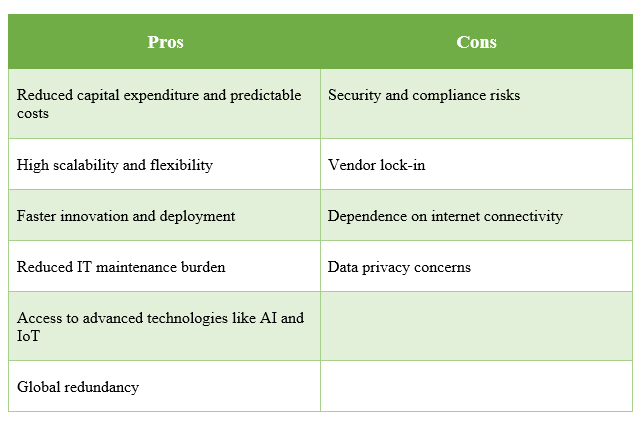
These XaaS business benefits help organizations stay competitive in a rapidly evolving digital landscape. But understanding these XaaS adoption challenges is essential for successful implementation.
Architecture of XaaS
XaaS is an umbrella term that includes all cloud-delivered services. Unlike traditional IT (on-site), XaaS offers a complete, integrated service delivery model. While SaaS, PaaS, and IaaS are individual cloud service models.
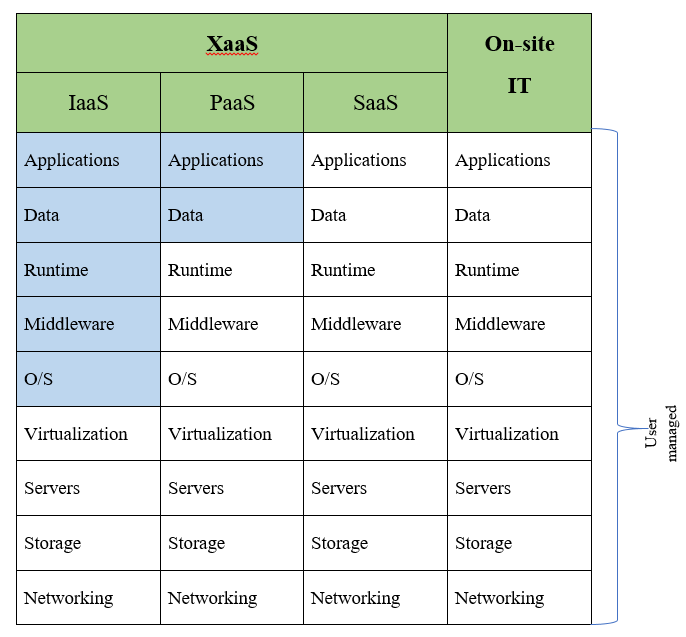
Portion highlighted in blue indicate the user managed services in different models and traditional model. Unlike traditional IT’s heavy hardware and maintenance costs, XaaS provides a utility-based model that swaps capital-intensive overhead for a focus on core objectives.
Implementation of XaaS in Enterprise
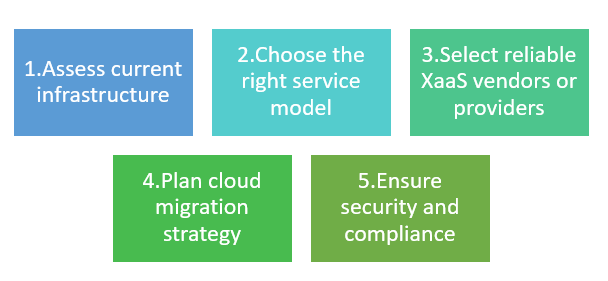
1. Assess Infrastructure
- Audit: Map out all current apps, hardware, and data.
- Readiness: Identify which legacy systems can move easily and which require a total overhaul.
- Benchmarks: Document current performance to measure future success.
2. Choose the Service Model
- SaaS: Use for standard tasks (Email, CRM, HR).
- PaaS: Use for custom app development (Managed platforms).
- IaaS: Use for maximum control (Virtual servers and storage).
3. Select Reliable Vendors
- SLAs: Demand high uptime guarantees (e.g., 99.9%).
- Exit Strategy: Ensure data portability to avoid “vendor lock-in.”
- Support: Verify their technical support matches your business needs.
4. Plan Migration Strategy
- Phased Approach: For testing, begin with non-critical workloads.
- Method: Decide whether to Lift & Shift (move as-is) or Refactor (update for the cloud).
- Cost Control: Monitor usage early to avoid “bill shock” from automated scaling.
5. Ensure Security & Compliance
- Shared Responsibility: Note that the provider secures the cloud while you secure your data.
- IAM: Implementations of strict Identity and Access Management (MFA is a must).
- Regulatory Alignment: Confirm the vendor meets industry standards (GDPR, HIPAA, SOC2).
Examples of XaaS
Some well-known everything as a service examples include:
1. SaaS (Software as a Service)
- Service: Software product for use.
- Example: Netflix or Gmail.
2. IaaS (Infrastructure as a Service)
- Service: Raw computing power (the “digital engine”).
- Example: AWS (Amazon Web Services).
3. PaaS (Platform as a Service)
- Service: Pre-made workshop for creators.
- Example: Google App Engine.
4. XaaS (Anything as a Service)
- Service: Cloud Superstore with every service.
- Example: Microsoft Azure.
FAQ about XaaS
1. What is XaaS?
XaaS is a cloud computing model where IT services are delivered on demand via the internet instead of on-premises.
2. Is XaaS the same as cloud computing?
XaaS is a subset of cloud computing focused on delivering everything as a service.
3. How does XaaS differ from SaaS?
SaaS specifically focuses only on software applications, while XaaS covers a broader area, including infrastructure, security, communications, and more.
4. What are examples of XaaS?
Examples of XaaS include SaaS, IaaS, and platforms like AWS, Azure, etc.
5. What are examples of XaaS models?
- DaaS: Citrix, VMware Horizon
- IaaS: Azure, Google Compute Engine
- PaaS: AWS Elastic Beanstalk, Heroku
- SaaS: Google Workspace, Salesforce
6. What are the risks of XaaS?
Vendor lock‑in, data security concerns, downtime risks, and hidden subscription costs
7. Why is XaaS growing?
Because it reduces costs, increases flexibility, and supports digital transformation
8. Why do your businesses require XaaS?
Reduces upfront costs, scales flexibly, and lets organizations focus on core operations instead of IT maintenance.